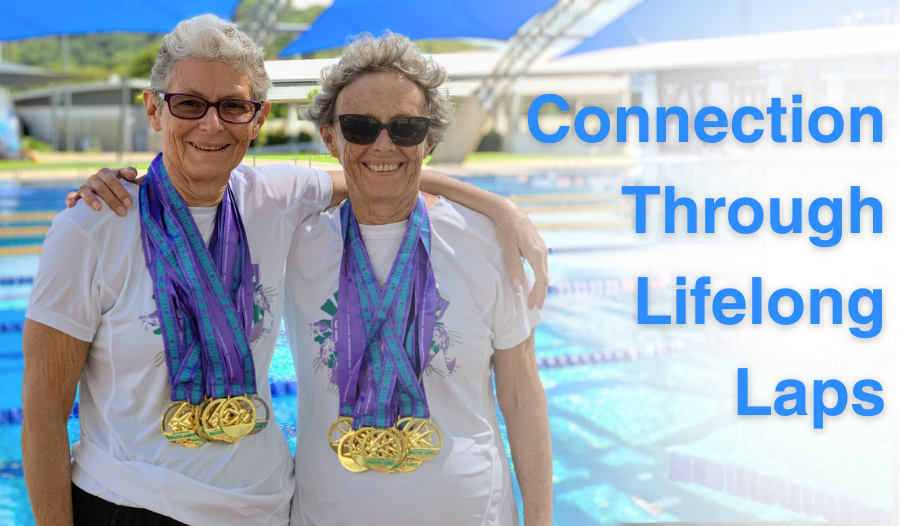
Connection Through Lifelong Laps – Narelle Phillips and Marsha Reddiex
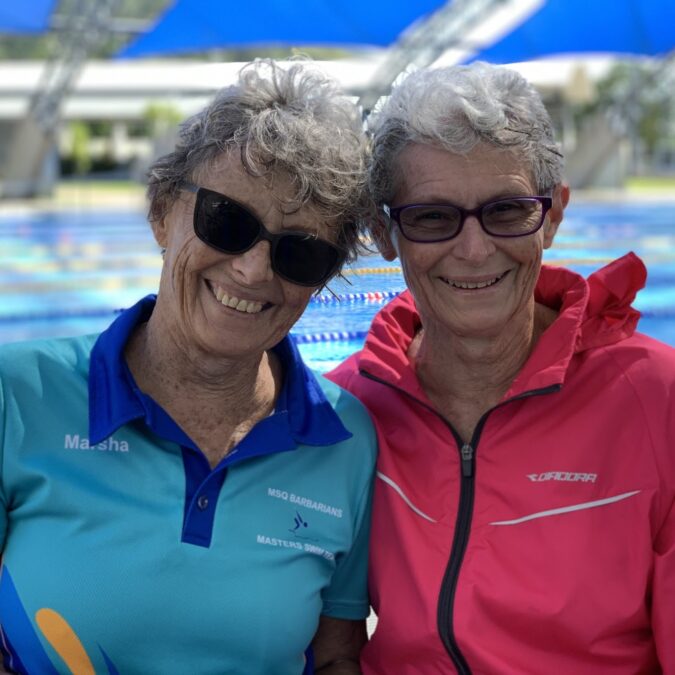
“Narelle and I are part of Belgravia Masters in Burpengary,” Marsha laughs warmly as she introduces the sister duo who have spent decades together by the poolside. Their shared family story is one of fitness, friendship, and a love of swimming that has carried them through competitions, travel, and daily routines.
Narelle remembers her first Masters meet clearly. “I joined in 1999… my first swim meet was the following Easter in 2000. It was States and Nationals. I was absolutely horrified. I had no idea what I was doing,” she admits.
Marsha nods to that early uncertainty, but both kept returning for the community as much as the sport. “The friendship is long‑lasting,” Narelle says. “You don’t see some swimmers from meet to meet, but you’re all friends still, swimming friends.”
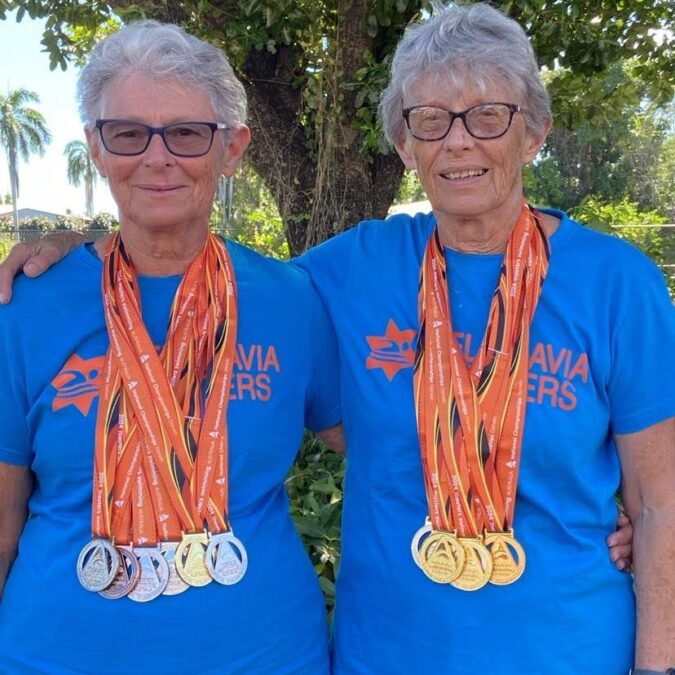
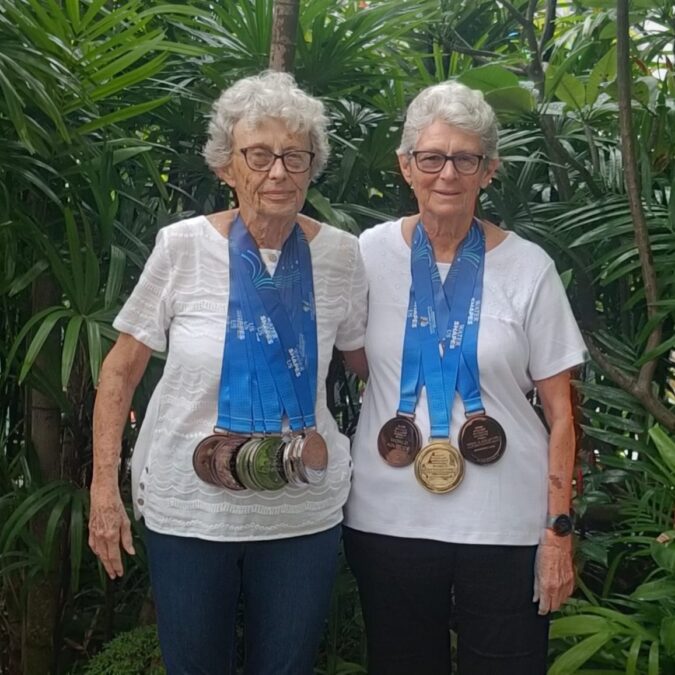
Their persistence paid off at Worlds in Singapore. Marsha came home with six medals, and Narelle came home with three. “I got a gold!” Narelle beams. For the sisters, the medals were more than metal: “That was the proudest moment… we didn’t think we would have a chance.
Masters, for them, is as much a social ritual as an athletic pursuit. “We don’t do a training session without a cup of coffee afterwards,” Narelle declares. She teaches swim classes on Bribie Island for children and adults. She values how different generations keep one another engaged: “All the young ones keep us active—just listening about what their children and grandchildren are doing.”
That intergenerational spirit is exactly what they hope will endure. “I like to think it stays friendly,” Narelle says of the future of Masters Queensland. She wants an environment that welcomes everyone from teens right through to 100 and preserves the warmth that kept her coming back.
Both sisters note how much has shifted since their early days. “We had no goggles, we had no kick boards, we didn’t have fins… and no flags for the backstroke,” Narelle recalls.
Competition and officiating have tightened: “Bringing the younger ones in has made it more competitive,” she says, and “we used to have one referee, now you’ve got four referees around the pool.”
Still, the pleasures remain simple. Narelle fondly remembers the club raffles, post‑race food and travel stories: “We flew to Singapore… we had lovely beer. We couldn’t afford the imported wine.” She laughs at another memory—turning up to a 400 free with her “goggles twisted around my face.”
As Masters events grow more competitive, both sisters stress that accessibility must not be lost. “I hope the young ones still keep coming—they are the future of Masters,” says Narelle, adding that patience for older swimmers is vital: “I like that everybody’s welcome, and we want to see that continue for many generations to come.”
For Marsha and Narelle, Masters swimming weaves into life itself. “I don’t know what we’d do without it,” Narelle confesses. It is fitness, ritual, friendship and occasional medals—but, most of all, the steady comfort of lanes shared across generations.